
Challenge coins started in the military as tokens of unit membership and respect. Today they’re used across police departments, nonprofits, and corporations to recognize achievement and build belonging. But when some people give a coin, they often do not know how to give it at the right time, right way, and even someone made mistakes.As coin makers, we’ve heard many stories—some powerful, some a bit awkward. This guide shares the lessons we’ve learned.
This guide walks you through exactly when to give one, how to hand it off, and what to actually say so the person receiving it feels the recognition is real.
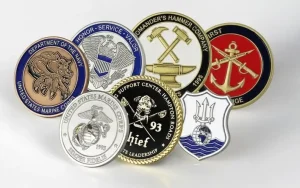
Understanding What You’re Actually Giving
Before you hand over a challenge coin, understand what you’re actually doing. It’s not a participation trophy or a polite thank-you. It’s a statement that someone has earned something that sticks with them.
A challenge coin started in World War I when an officer minted bronze coins for his flight squadron. One pilot was shot down and captured, then escaped. When locals thought he was a spy, he showed his squadron’s coin—and they let him live. That coin proved he belonged to something real.
That’s the weight it carries. In military units, it marks service and honor. In law enforcement, it recognizes bravery. In corporate teams, it marks exceptional performance. Years later, people remember the exact moment they received it and why. That’s why presentation matters so much—timing, words, and method all affect whether it becomes a real memory or just a nice object.

When to Give a Challenge Coin
Timing shapes what a challenge coin means. Present it at the right moment and it sticks. Present it wrong and it’s just a nice gesture.
Recognition of Achievements
Give a coin soon after someone accomplishes something significant. A few days or weeks, not months. That’s when the memory is fresh and the connection strongest. Military: after a successful mission. Law enforcement: after responding to a critical incident. Corporate: after solving a major problem. Nonprofit: after completing a big community project.
Showing Appreciation or Respect
Challenge coins are a small but intimate gift to show respect and appreciation. They’re given after a successful mission or after finishing something significant to show recognition and respect. It’s a physical and lasting sign of gratitude and admiration that the recipient can bring anywhere.
Commemorate Events
Challenge coins are given and used during special events to celebrate milestones and anniversaries. They’re used to commemorate significant projects and achievements.
Tech startups, manufacturing corporations, and corporate HR managers customize their challenge coins with their logo. Many companies customize coins with their logo or even laser‑engrave each recipient’s name to make the moment more personal.
These coins can be used as merchandise at product launches and other company projects and achievements.
Transitions and Milestones
Mark moments that matter. A new member’s first significant contribution. A promotion. A retirement. Years of service. Project completion. Organizational anniversaries. These moments need acknowledgment, and a coin makes it stick.
Building Team Culture
Sometimes you give coins to reinforce what the whole team values, not just recognize individuals. Present them at team events, after shared achievements, or during annual recognition. A nonprofit’s annual dinner where you give coins to long-term volunteers—the message to everyone watching is clear: loyalty and commitment get recognized here.
Common Timing Mistakes
Don’t wait months—the moment fades. Don’t give coins when someone is struggling unless you mean to lift them up. Don’t distribute them to everyone—that kills their value.
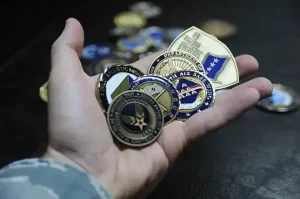
What To Say When Giving A Challenge Coin
The words you use matter more than you think. Generic words drain the power from a challenge coin. Here you go the structure:
- Name the moment
- Describe what they did
- Connect it to your values
- End with a clear “thank you”
For example: Be specific. Name the date, event, or situation. Describe the exact impact their actions had. Don’t say “you’re a great team player.” Say: “On March 15th, when the server crashed at 2 a.m., you stayed calm and found the fix that kept us online. That’s exactly who we need.”
Don’t say “you helped the community.” Say: “You recruited 12 new volunteers and trained each one. That’s why we could expand our program from serving 50 families to 150.”
Explain why this quality or action matters to the organization. Connect it to real values. Keep it brief—30 seconds to 1 minute is enough. The key is specificity. When someone hears exactly what you noticed about them, they know the recognition is real. Not generic praise. Not something you could say to anyone. Something true about them.
Proper Ways To Give Challenge Coins
The Handshake Pass
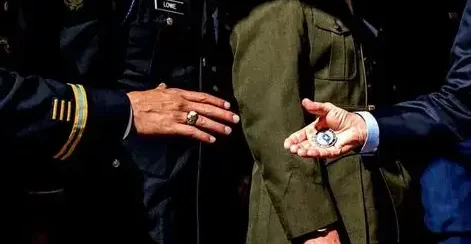
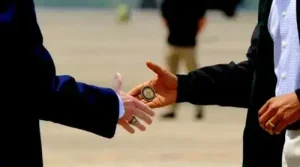
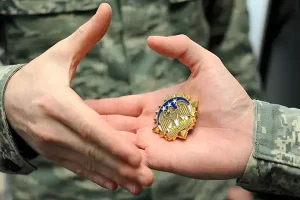
This is the traditional military and law enforcement method. Hold the coin in your right hand, hidden in your palm. When you shake hands, the coin transfers silently to their hand. Make eye contact. Say a few words about why you’re giving it. The recipient feels the coin during the handshake—surprise, recognition, all in one moment.
Use this for one-on-one recognition where you want to honor tradition while keeping it personal. It’s discreet. It says: I noticed what you did, and this is between us.
Formal Ceremony Presentation
In official settings—retirement party, promotion event, annual recognition dinner, team gathering—present the coin visibly. Stand facing the recipient. Hold the coin so others can see it. Speak for 30 seconds about the specific achievement. Hand it directly and let them examine it. This moment is worth photographing.
Formal presentations work for corporate teams, government agencies, and military units. They reinforce organizational values in front of peers and create lasting documentation.
One-on-One Private Setting
Sometimes the most meaningful presentations happen quietly. Sit down with the person in a private space. Explain why you chose this moment to give them the coin. Share what you observed about their character or contribution. Let them react and ask questions.
This approach works for people who dislike public attention, for deeply personal recognitions, or when you want the conversation itself to matter as much as the coin.
Matching the Method to Your Audience
Different organizations have different cultures. The best presentation fits the setting and the people you work with.
Military, Police & First Responders
These groups hold the military challenge coin tradition most closely. Presentation is typically private and discreet—a handshake pass rather than public fanfare. Emphasize service, integrity, and the trust placed in the recipient. Timing often follows a specific mission or incident. The coin itself may carry unit insignia or rank, adding to its meaning. Keep the moment formal but personal.
Corporate Teams
You can mix methods: one-on-one for deeply personal recognition, team recognition for broader achievements. Photography and sharing the moment builds company culture and shows employees that excellence is visible and valued. Be careful not to dilute the corporate coin by giving too many—they only mean something if they remain earned rather than distributed like business cards.
Non-Profits & Community Organizations
Coins given to volunteers, donors, or long-term members often happen at annual events, fundraisers, or volunteer appreciation gatherings. The tone can be warmer and more personal. Emphasize the mission impact and the recipient’s role in it. For donors, acknowledge the trust they’ve placed in your work. For volunteers, recognize the time they’ve given.
Schools & Academic Institutions
Present coins to students for academic excellence, leadership, or character; to teachers for innovation or mentorship; to alumni for contributions back to the school. These can happen at graduations, award ceremonies, or special events. Emphasize achievement and excellence, and let recipients know they’re part of a legacy.
Common Mistakes to Avoid
Giving too many coins. They stop meaning anything. Give them only when someone genuinely earns recognition. A unit of 50 should give maybe 3-5 a year, not to everyone.
Using as apology or consolation. A coin says: you earned this. Not: I’m sorry things didn’t work out.
Presenting without context. If they’ve never heard of challenge coins, explain briefly what it means and why you’re giving it.
Ignoring personality. Some people love public recognition. Others hate the spotlight. Present one-on-one if that fits better.
Expecting something in return. Don’t give a coin expecting loyalty or future performance. The coin is the end, not a down payment.
Designing a Challenge Coin Worth Giving
A meaningful challenge coin starts with a good design. We have produced millions of coins for many customers. You may consider my suggestions as below:
- Consider including elements that connect directly to the achievement or milestone being recognized, such as a unit insignia, company logo, mission motto, significant date, or event location. These details help remind the recipient why they received the coin in the first place.
- Personalized features like serial numbers, individual names, ranks, shows that the recognition was unique and only one.
- In our experience, less is more— do not make the coin design too complicated.
FAQs
1. What Does It Mean To Be Given A Challenge Coin?
Challenge coins represent honor, achievement, membership, and affiliation to a certain team or organization.
2. Can I Customize My Challenge Coins?
Yes. You can design them with your logo, emblem, name, or achievements.
3. Can You Give A Challenge Coin To A Civilian?
Absolutely. While challenge coins originated in the military, they are now commonly given to employees, volunteers, donors, business partners, and community leaders to recognize contributions and achievements.
4. Are You Supposed To Carry Challenge Coins?
Yes, you can carry it whenever you want.
5. Is It A Big Deal To Get A Challenge Coin?
Yes, especially for the military department, it is a big deal.
6. Where To Put Challenge Coins?
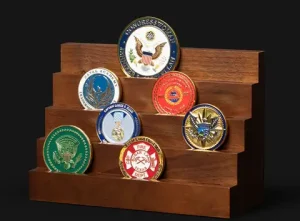
You can put it in a coin capsule, velvet bag, and if you have more coins, you can buy a coin display to show them.
7. What Does It Mean If You’re Given A Challenge Coin?
Which means you achieve a good performance, or make a great contribution, or years of service.